
Structure | |
 | |
| Explanation & Guidance | |
| Describes a purposeful state, the result of a deliberate action. | |
| Examples | |
| 1. | ドアを あけます(Open the door) ドアが あけてあります(The door has been opened) |
| 2. | ふうとうに 切手が はってあります。 There is a stamp on the envelope. |
Structure | |
~ Nが V他てある ~ Nが V自ている | |
| Explanation & Guidance | |
Both are used to describe a state or phenomenon, but V他てある is the result of a deliberate action. れい: ドアを あけます ドアが あけてあります。(V他) ドアが あいています。 (V自) Open the door The door has been left open (Someone opened it in advance for some purpose) The door is open (This describes the door's current state) | |
| Examples | |
| 1. | お皿に 魚が きってありますから、これから さしみを 作りましょう。 Since there’s sliced fish on the plate, let’s make sashimi now. |
| 2. | A: ケーキは どこですか。 A: Where’s the cake? B: ケーキは もう テープルに おいてありますよ。 B: The cake is on the table. |
| Meaning (There are three meanings) | |
| ☞ | Prepare in advance
|
| 1. | A: 会議の前に なにを しておきますか。 A: What should we prepare in advance before the meeting? B: 資料を コピーしておきます。 B: Make copies of the materials in advance. |
| 2. | A: 旅行に 行く前に 何を しておいたら いいですか。 A: What should we prepare in advance before going on a trip? B: ホテルを 予約しておいたら いいですよ。 B: We should book a room ahead of time. |
| ☞ | Used to handle a situation after performing some action or to provide a temporary solution.
|
| 1. | A: この本は どう しましょうか。 A: What should I do with this book? B: 読んだら、本棚に 戻しておいてください。 B: After you finish reading it, please return it to the bookshelf. |
| 2. | A: ナイフと フォークは どこに しまいましょうか。 A: Where are the knives and forks kept? B: 元の所に しまっておいてください。 B: Please put them back where they were. |
| ☞ | Keep or maintain a certain state.
|
| 1. | A: 片付けましょうか。 A: Let me clean up. B: もうすぐ会社に行く時間ですから、そのままに しておいてください。 B: Since it’s almost time to go to work, please just leave it as is. |
| 2. | A: 窓を しめてもいいですか。 A: Is it okay if I close the window? B: すみません、ちょっと あついですから、そのまま あけておいてください。 B: Sorry, it’s a bit hot, so please leave it open as it is. We can conjugate the verb おく into the appropriate forms. |


Structure | |
| |
| Explanation & Guidance | |
| ☞ | Describes a state or an action that is still ongoing. |
| Examples | |
| 1. | A: あめは もうやみましたか。 A: Has the rain stopped? B: いいえ、まだ ふっていますよ。 B: Not yet, it’s still raining. |
| 2. | A: このはさみを しまいましょうか。 A: Shall I put these scissors away? B: いいえ、まだ 使っていますから そのままにして おいてください。 B: Hold on—I’m still using them, so please leave them there. |

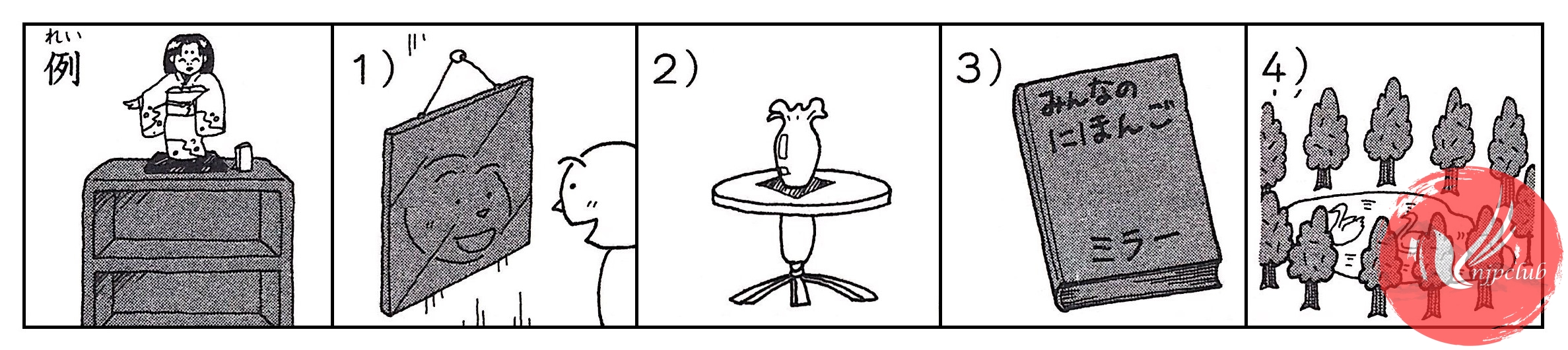
例:
Complete the following sentences:
1)⇒ 2)⇒ 3)⇒ 4)⇒
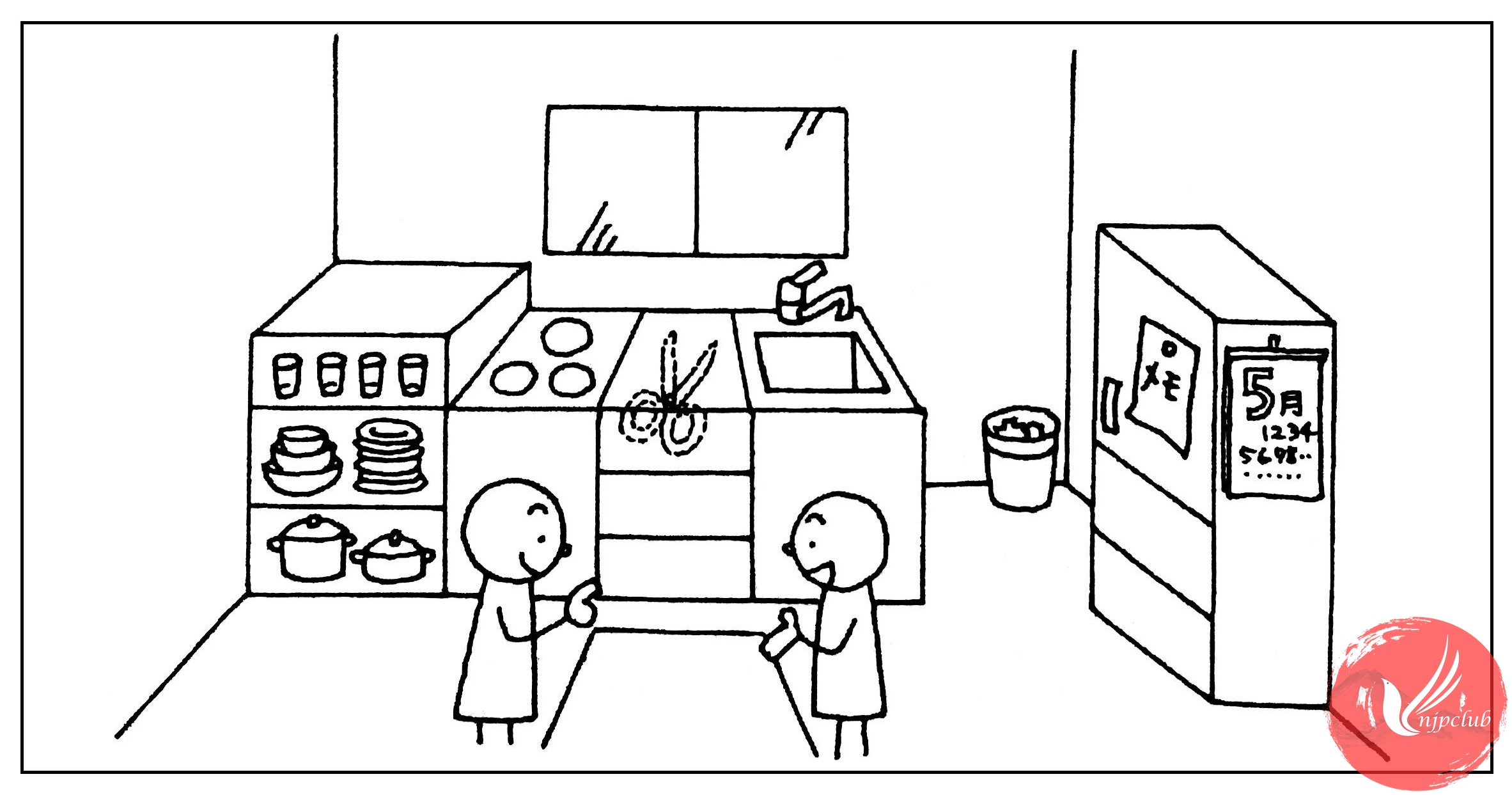
Complete the following sentences:
1) カレンダーは どこですか。 ⇒
2) ごみ箱は どこですか。 ⇒
3) はさみは どこですか。 ⇒
4) コップは どこですか。 ⇒
例1:レポートを 書きます・資料を 集めます。
例2:授業・予習します
Complete the following sentences:
1) 友達が 来ます・部屋を 片づけます ⇒
2) 料理を 始めます・道具を 準備します ⇒
3) 試験・復習します ⇒
4) 旅行・ガイドブックを 読みます ⇒
例:来週の 講義・この 本を 全部 読みます
Complete the following sentences:
1) 7時・食事の 準備を します ⇒
2) 月曜日・レポートを まとめます ⇒
3) 次の 会議・この 問題に ついて 考えます ⇒
4) 引っ越しの 日・郵便局に 新しい 住所を 連絡します ⇒
Complete the following sentences:
1) 地図(机の 上に 置きます)
2) ビデオカメラ(あの 棚に 戻します)
3) 電子辞書(この 引き出しに しまいます)
4) いす(元の 所に 並べます)
(まだ 使って います・そのままに します)
Complete the following sentences:
1) 窓を 開けましょうか。
(寒いです・閉めます) ⇒
2) テレビを 消しましょうか。
(もうすぐ ニュースの 時間です・つけます) ⇒
3) あの 箱、捨てましょうか。
(あとで 使います・置きます) ⇒
4) 机の 上の 物を 片づけましょうか。
(わたしが やります・そのままに します) ⇒