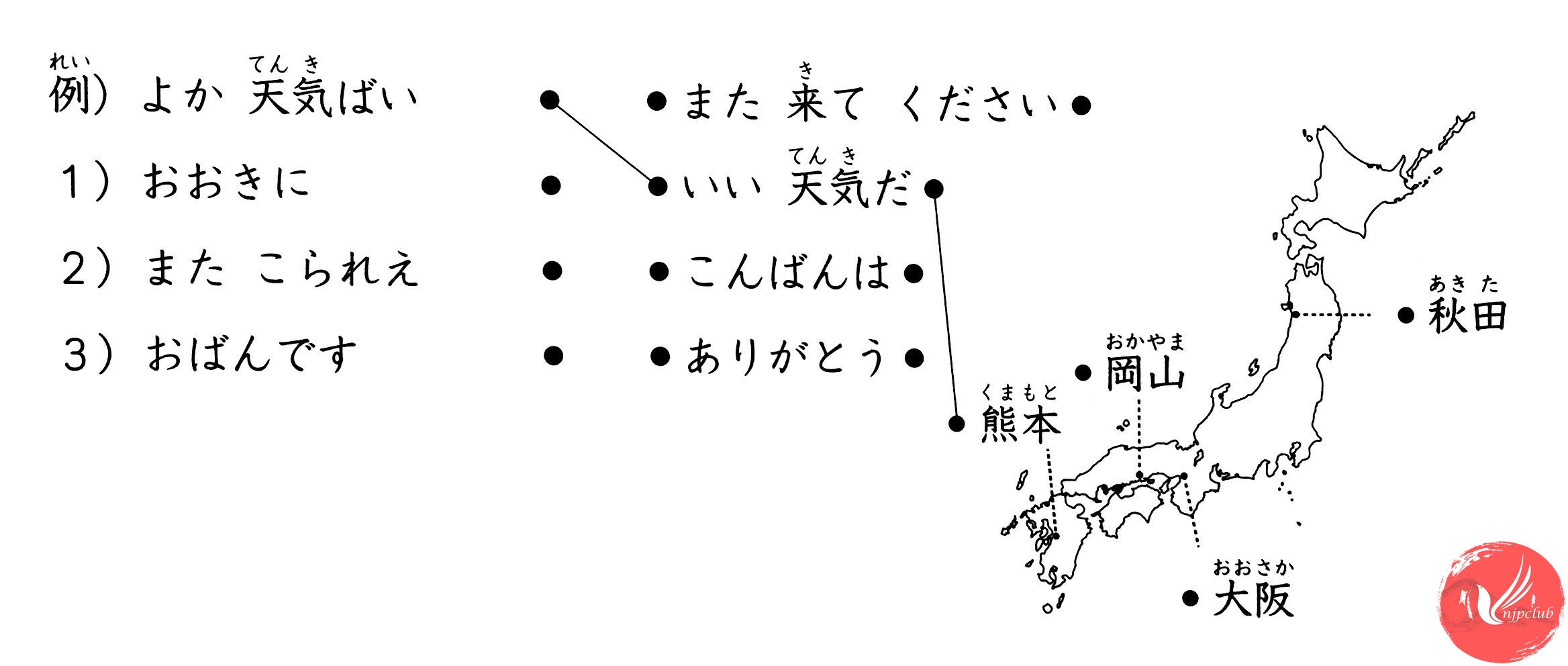
1. 何と 言いましたか。どこの ことばですか。
What did you say? Which regional dialect is it?

|
例)よか天気ばい |
a) また 来て ください |
A)熊本 |
|
1) おおきに |
b) いい 天気だ |
B)岡山 |
|
2) また こられえ |
c) こんばんは |
C)大阪 |
|
3) おばんです |
d) ありがとう |
D)秋田 |
例:
Answer:例 - b - A««« Script & Translation »»»
|
A: | ああ、きょうは よか天気ばい。 Ah, the weather is nice today, isn't it? |
|
B: | え、今、何と 言いましたか。 Huh? What did you just say? |
|
A: | 「きょうは いい天気だ」と 言いました。 I said, [The weather is nice today]. 福岡では、そう言いますよ。 That's how people say it in Fukuoka. |
|
B: | |
|
| Answer: - b - A |
1)
««« Script & Translation »»»
|
A: | |
|
B: | おおきに。 Thank you (Osaka dialect). |
|
A: | |
|
B: | いえ、「おおきに」と 言いました。大阪の ことばで 「ありがとう」ですよ。 No, I said "ookini." In Osaka dialect, it means "thank you." |
|
A: | ふーん、日本語は 難しいですね。 Wow, Japanese is really difficult, isn't it? |
|
| Answer: d - C |
2)
««« Script & Translation »»»
|
A: | |
|
B: | |
|
A: | え、今、何と 言いましたか。 Huh? What did you just say? |
|
B: | 「また来てください」と同じですよ。 It means the same as [Mata Kitekudasai] ("Please come again"). 岡山の ことばです。 That's a dialect from Okayama. |
|
A: | きょうは ありがとうございました。また 来ます。 Thanks for today. I'll come again. |
|
| Answer: a - B |
3)
««« Script & Translation »»»
|
A: | |
|
B: | え、今、何と 言いましたか、 Huh? What did you just say? |
|
A: | ああ、秋田のことばを 使いました。 Ah, I used the Akita dialect. 「おばんです」は「こんばんは」と 同じです。 [Oban desu] means [Konbanwa] (Good evening). |
|
B: | |
|
| Answer: c - D |
2. 留学生は アルバイトについて 話しました。留学生の 意見は どうですか。どうしてですか。
The international students discussed part-time jobs. What are their opinions, and why?
アルバイトは いい……Oよくない……X
Mark 〇 if part-time work is good; mark ✖ if it is not.
|
例) リン( X ) | Answer: b |
a.いろいろな 人に 会う ことが できる |
|
1) カリナ(____) |
____ |
b.勉強の 時間が 少なく なる |
|
2) キム(____) |
____ |
c.日本語が 上手に なった |
|
3) エド(____) |
____ |
d.疲れるから、勉強が できない |
例:
««« Script & Translation »»»
|
A: | きのう、先生は アルバイトは よくないと 言いました。 Yesterday, the teacher said that part-time jobs are not good. 先生の 意見について どう思いますか。 What do you think about the teacher's opinion? |
|
B: | 先生は わたしたちの 勉強を 心配していると 思います。 I think the teacher is worried about our studies. わたしも アルバイトは よくないと 思います。 I also think part-time jobs are not good. 勉強の 時間が 少なくなりますから。 Because you end up having less time to study. わたしは していません。 I don't have a part-time job. |
|
| Answer: X - b |
1)
««« Script & Translation »»»
|
A: | カリナさんは どう 思いますか。 Karina, what do you think? |
|
C: | いろいろな 人と 日本語で 話すことが できました。 I was able to speak Japanese with many different people. 日本語が 上手に なったと 思います。 I think my Japanese has improved. ですから、アルバイトを してもいいと 思いますよ。 So I think having a part-time job is fine. |
|
| Answer: O - c |
2)
««« Script & Translation »»»
|
A: | キムさんは アルバイトを していますね。 Kim, you work part-time, right? |
|
D: | ええ、でも、アルバイトは よくないと 思います。 Yes, but I think part-time jobs are not good. とても 疲れますから、 Because it's very tiring, でも、1か月に 5万円足りませんから、しなければなりません。 But since I'm short by 50,000 yen each month, I have to work. |
|
A: | |
|
| Answer: X - d |
3)
««« Script & Translation »»»
|
A: | エドさんは アルバイトを していますか。 Edo, you're working part-time, right? |
|
E: | いろいろな 人に 会うことが できますから、楽しいですよ。 Because I can meet a lot of people, it's really fun. アルバイトを しても いいと 思います。 I think working part-time is good too. |
|
A: | いろいろな 意見が ありますが、 There are many different opinions, though. 問題は 時間の 使い方ですね。 The issue is how to use time, right? |
|
B~E: | |
|
| Answer: O - a |
3. 田中さんは カリナさんと 日本人の 生活について 話しました。田中さんと カリナさんの 意見は 同じですか。
Tanaka talks with Karina about the lives of Japanese people. Do Tanaka and Karina have the same opinions?
同じ……O同じじゃ ない……X
If they are the same, mark 〇; if not, mark ✖

例:
Answer: O««« Script & Translation »»»
|
A: | カリナさん、日本人は よく働くでしょう? Karina, Japanese people work hard, don't they? |
|
B: | 日本人は ほんとうに よく働くと 思います。 I think Japanese people really work very hard. 田中さんも 毎日忙しいでしょう? Tanaka, you're busy every day too, aren't you? |
|
A: | 残業も 多いですよ。 There's a lot of overtime, too. |
|
B: | |
|
| Answer: O |
1)
««« Script & Translation »»»
|
A: | カリナさん、日本は 物価が 高いでしょう? Karina, prices are high in Japan, aren't they? |
|
B: | ええ、わたしの 国より ずっと高いですね。 Yes, they're much higher than in my country. 特に、電車や バスが 高いですね。 Especially trains and buses are expensive. |
|
A: | |
|
B: | ええ、それから、食べ物が 高いですね。 Yes, and food is expensive too. 留学生の 生活は ほんとうに 大変です。 Life for international students is really hard. |
|
A: | 物価が 高いですから、日本人も 大変ですよ。 Because prices are high, Japanese people have a hard time too. |
|
| Answer: O |
2)
««« Script & Translation »»»
|
A: | カリナさん、日本の 学生は よく遊ぶでしょう? Karina, Japanese students go out and have fun a lot, don't they? |
|
B: | |
|
A: | スポーツ、旅行、コンサート……。 Sports, trips, concerts... 勉強は あまり しませんでしたね。 I didn't study very much, either. |
|
B: | でも、わたしの 日本人の 友達は みんな よく勉強しますよ。 But all of my Japanese friends study hard. レポートや 試験が たくせんありますから。 Because they have lots of reports and exams. |
|
A: | 僕の 学生時代と 違いますね。 That's different from my student days. |
|
| Answer: X |
3)
««« Script & Translation »»»
|
A: | 最近、電車の中で、みんなケータイを見ているでしょう? Nowadays, everyone is looking at their phones on the train, aren't they? |
|
B: | |
|
A: | あまり 本や 新聞を 読んだりしませんね。 They don't really read books or newspapers, do they? |
|
B: | 町や駅でも みんな ケータイを 見ています。 Even in town and at stations, everyone is looking at their phones. |
|
A: | ほかの 人を 全然 見ていませんね。 They're not paying attention to other people at all, are they? 特に、駅は…ね。 Especially at train stations... |
|
| Answer: O |
4. ジャンさんは 大学の クラブで 話を 聞いて、あい子さんに メールを 書きました。どんな メールを 書きましたか。
Jean listened to a talk at a university club and then wrote an email to Aiko. What kind of email did he write?

大学の クラブ
20XX年5月17日 19:13 From: janjan@goooogle.com To: aiai@yohoooo.com 大学の 生活に 慣れましたから、 Now that I've gotten used to university life, クラブに 入りたいと 思います。 I think I'd like to join a club. きょうは、いろいろな クラブを 見に 行きました。 Today I went to see various clubs.
例)まず、柔道クラブへ 行きました。柔道は 初めは ( 易しい )ですが、だんだん( 難しくなる )と クラブの 人は 言いました。 ちょっと 練習しましたが、とても 痛かったです。
1) 相撲クラブの 人は 相撲は(___)と言いました。 でも、下着を 脱がなければなりませんから、(___)と思います。
2) お茶は、たたみに 座らなければ なりませんから、(___)と 思います。
3) 書道の クラブの 人は 書道は 字が きれいに なるから、きっと(___)と 言いました。わたしも そう 思います。来週から 書道を 始めます。
じゃ、また。
ジャン |
例:
Answer:易しい 難しくなる««« Script & Translation »»»
|
A: | あのう、柔道は 難しいですか。 Excuse me, is Judo difficult? |
|
B: | だんだん 難しく なりますが。 But little by little, it gets difficult. |
|
A: | |
|
B: | ちょっと 練習しませんか。 Would you like to practice a little? |
|
A: | |
|
| Answer: 易(やさ)しい 難(むずか)しくなる |
1)
««« Script & Translation »»»
|
A: | すみません。あのう、相撲は 楽しいですか。 |
|
C: | |
|
A: | あのう、下着を 脱がなくても いいですか。 May I ask, is it okay if I don't take off my underwear? |
|
C: | |
|
A: | じゃあ、わたしは できません。 In that case, I can't do it. |
|
| Answer: 楽(たの)しい、できない |
2)
««« Script & Translation »»»
|
A: | お茶は 難しいですか。 Is the tea ceremony difficult? |
|
B: | 初めは 難しいと 思います。 At first, I thought it was difficult. でも、だんだん 楽しく なりますよ。 But little by little, it becomes enjoyable. |
|
A: | あのう、たたみに 座らなければなりませんか。 Excuse me, do we have to sit on the tatami? |
|
B: | |
|
A: | じゃ、ちょっと 無理ですね。 In that case, that might be a bit difficult for me. |
|
| Answer: 無理(むり)だ |
3)
««« Script & Translation »»»
|
E: | 書道クラブです。 This is the calligraphy club. 書道を習いませんか。 Would you like to learn calligraphy? |
|
A: | あのう、わたしは漢字を あまり知りませんが、できると思いますか。 Excuse me... I don't know much Kanji, but can I still join? |
|
E: | ひらがなで書いても いいですよ。 Writing in Hiragana is fine, too. 字が きれいに なりますよ。 Your handwriting will become even prettier. |
|
A: | じゃ、ぜひ 習いたいです。 In that case, I definitely want to learn. |
|
E: | じゃ、来週から どうぞ。 In that case, please join us starting next week. |
|
A: | よろしくお願いします。 I look forward to working with you. |
|
| Answer: 役(やく)に立(た)つ |