
Structure | |
| |
| Meaning | |
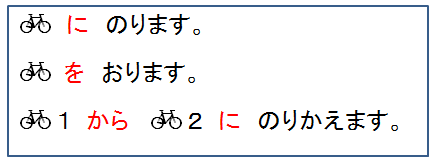
| ☞ | ~に 乗ります:Get on (a train/vehicle) ~ ~を 降ります:Get off (a train/vehicle) ~ ~から~に 乗り換えます:Transfer (change trains/vehicles) from ~ to ~ ~を leave, exit ~ ~に enter, get onto ~ |
| Examples | |
| 1. | でんしゃに のります。 Get on the train. でんしゃを おります。 Get off the train. でんしゃから バスに のりかえます。 Transfer from the train to a bus. |
Structure | |
| |
| Explanation & Guidance | |
| ☞ | Used to make a compound sentence.
|
| Examples | |
| 1. |
毎日 6じに おきます。朝ご飯を たべます。それから がっこうへ 行きます。 →毎日 6じに おきて、朝ご飯をたべて、それから がっこうへ 行きます。 Every morning I wake up at 6, have breakfast, then go to school. |
| 2. |
私は 会社員です。田中さんは 医者です。 →私は 会社員で、田中さんは医者です。 I'm a company employee, and Mr. Tanaka is a doctor.
私は フンです。私は がくせいです。 →私は フンで、がくせいです。 I'm Huong, a student. |
| 3. |
この木は ながいです。そして、おもいです。 →この木は ながくて、おもいです。 This one is both long and heavy.
この所は きれいです。そして、しずかです。 →この所は きれいで、しずかです。 This place is beautiful and quiet. |
.png)
Structure | |
~ は V1てから、V2. | |
| Meaning | |
| ☞ | After V1, V2. |
| Explanation & Guidance | |
| ☞ | Emphasizes the order of actions. Conjugate the final verb (V2) for future, present, past… The subject of the main clause takes は; the subject of the subordinate clause takes the particle が. |
| Examples | |
| 1. | ごはんを たべてから、はを みがきます。 After eating, I brush my teeth. |
| 2. | A: きのう、なにを しましたか。 A: What did you do yesterday? B: 新聞を よんでから、でかけました。 B: After reading the newspaper, I went out. |
Structure | |
Whole は details が ~ | |
| Examples | |
| 1. | 北海道は 雪が 多いです。 Hokkaido has a lot of snow. |
| 2. | A: マリアさんは どうですか。 A: What is Maria like? B: めが おおきくて、はだが しろいです。 B: She has big eyes and fair skin. |
| 3. | A: ゆみこさんは どのひとですか。 A: Which one is Yumiko? B: かみが くろくて、ながいひとですよ。 B: She's the one with long black hair. |
Structure | |
~は どうやって ~か。 | |
| Meaning | |
| ☞ | どうやって:By what means? |
| Explanation & Guidance | |
| ☞ | Used to ask about the sequence or method for doing something. |
| Examples | |
| 1. | A: 大学まで どうやって 行きますか。 A: How do I get to the university? B: 京都駅から 16番の バスに 乗って、大学前で 降ります。 B: From Kyoto Station, take bus number 16, then get off in front of the university. |
| 2. | A: どうやって おかねを だしますか。 A: How do I withdraw money? B: まず ここに カードを 入れて、それから、あんしょうばんごうと きんがくを 押してください。 B: First, insert your card here, then enter your PIN and the amount. |
Structure A: ~は どれですか。 どのN B: ~は Nです。 Identify a particular item within a group of three or more.
Meaning
☞ どれ : which one
どのN : which N
Explanation & Guidance
☞
Examples
1.
2.
例: 日曜日 梅田へ 行きます・友達に 会います
Complete the following sentences:
1) 昼 1時間 休みます・午後 5時まで 働きます ⇒
2) 京都駅から JRに 乗ります・大坂で 地下鉄に 乗り換えます ⇒
3) 市役所と 銀行へ 行きました・うちへ 帰りました ⇒
4) サンドイッチを 買いました・公園で 食べました ⇒

例:
Complete the following sentences:
1)⇒ 2)⇒ 3)⇒
例: 電話を かけます・友達の うちへ 行きます
Complete the following sentences:
1) お金を 下ろします・買い物に 行きます ⇒
2) きのう 仕事が 終りました・飲みに 行きました ⇒
3) 日本へ 来ました・日本語の 勉強を 始めました ⇒
4) お金を 入れます・ボタンを 押して ください ⇒
例: もう レポートを 出しましたか。(もう 一度 読みます)
Complete the following sentences:
1) もう 昼ごはんを 食べましたか。 (この 仕事が 終わります) ⇒
2) もう IMCに 電話しましたか。 (メールを 送ります) ⇒
3) もう 会議の 資料を コピーしましたか。 (松本さんに 見せます) ⇒
4) もう パワー電気へ 行きましたか。 (午後の 会議が 終わります) ⇒
例: 雪・多い
Complete the following sentences:
1) 人・少ない ⇒
2) 冬・長い ⇒
3) 食べ物・おいしい ⇒
4) 雪祭り・有名 ⇒
例1:
この カメラ・大きい・重い ⇒
例2:
ワットさん・親切・すてき ⇒
Complete the following sentences:
1) 私の 部屋・狭い・暗い ⇒
2) 沖縄の 海・青い・きれい ⇒
3) 東京・にぎやかで・おもしろい ⇒
4) ワットさん・45歳・独身 ⇒
例1:
例2:
Complete the following sentences:
1) ミラーさんは どんな 人ですか。(頭が いい・おもしろい) ⇒
2) サントスさんは どんな 人ですか。(元気・親切) ⇒
3) 寮の 部屋は どうですか。(広い・明るい) ⇒
4) ホテルは どうでしたか。(静か・サービスが いい) ⇒

例1:
例2:
Complete the following sentences:
1) ミラーさんは どの 人ですか。(若い・背が高い) ⇒
2) ワットさんは どの 人ですか。(ダンスが上手・すてき) ⇒
3) ミラーさんの かばんは どれですか。(黒い・古い) ⇒
4) カリナさんの かばんは どれですか。(赤い・小さい) ⇒