
Structure | |


 | |
| Explanation & Guidance | |
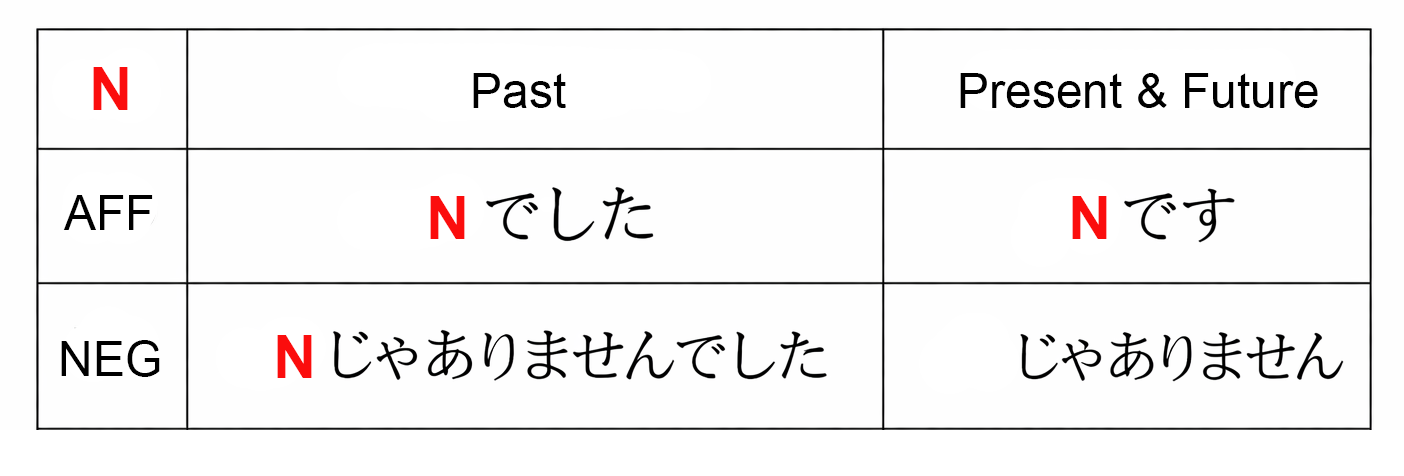
| ☞ | Na-adjectives behave similarly to nouns, so they conjugate the same way as nouns. |
| Examples | |
| 1. | A: きのうは どう でしたか。 A: How was yesterday? B: とても いそがしかったです。 B: It was very busy. |
| 2. | けさ あめでした。 It rained this morning. |
Structure | |
N1は N2より A~。 | |
| Meaning | |
| ☞ | より: than |
| Explanation & Guidance | |
| ☞ | N1 is more A than N2. |
| Examples | |
| 1. | A: Bさんの へやは どうですか。 A: How is B's room? B: Bさんの へやは Aさんの へやより ひろいです。 B: B's room is larger than A's room. |
| 2. | りんごは バナナより たかいです。 Apples are more expensive than bananas. |
Structure | |
N1は N2ほど ~Aない。 | |
| Meaning | |
| ☞ | ほど~ない: not as ~ as ~ |
| Explanation & Guidance | |
| ☞ | ほど with a negative ending means N1 is not as A as N2. |
| Examples | |
| 1. | A: Aさんの へやは どうですか。 A: How is A's room? B: Aさんの へやは Bさんのへやほど ひろくないです。 B: A's room isn't as large as B's room. |
| 2. | バナナは りんごほど たかくないです。 Bananas aren't as expensive as apples. |
Structure | |
~N1は N2と おなじぐらい ~。 | |
| Meaning | |
| ☞ | おなじ: the same; equal. |
| Explanation & Guidance | |
| ☞ | N1 and N2 are the same (in some property or characteristic). |
| Examples | |
| 1. | Aさんは Bさんと おなじぐらい せが たかいです。 A is as tall as B. |
| 2. | Aさんは Bさんと おなじとしです。 A is the same age as B. |
Structure | |
| |
| Meaning | |
| ☞ | いちばん: the most |
| Explanation & Guidance | |
| ☞ | Particle で: within an entire set or scope. N1 is the scope being asked about. The question word should match N1’s category. Question words |
| Examples | |
| 1. | A: 日本料理で 何が 一番 好きですか。 A: Which Japanese dish do you like best? B: すしが 一番 好きです。 B: Sushi is my favorite. |
| 2. | A: 世界で どこが 一番 きれいですか。 A: What place do you think is the most beautiful in the world? B: ベトナムが 一番 きれいです。 B: Vietnam is the most beautiful. |

Structure | |
| |
| Meaning | |
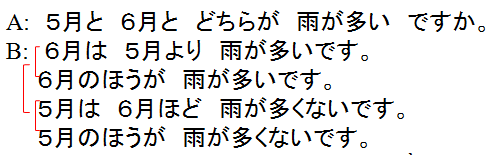
| ☞ | どちら: which way? which side? ほう: direction; side. 両方:both sides |
| Explanation & Guidance | |
| ☞ | We can express the same idea in many different ways when answering the question. |
| Examples | |
| 1. |
|
 | |
| 2. | A: いぬと ねこと どちらが 好きですか。 A: Which do you like better, dogs or cats? B: どちらも 好きです。 B: I like both. |

Structure | |
Aい/Aな + の | |
| Meaning | |
| ☞ | の~:the ~ one |
| Explanation & Guidance | |
| ☞ | Replaces the noun mentioned earlier. |
| Examples | |
| 1. | A: カリナさんの かばんは どれですか。 A: Which one is Ms. Karina's bag? B: あの赤くて、大きいのです。 B: It's the big red one over there. In the sentence above, の replaces かばん and is understood as 'the bag'. |
例:
きのう・いい 天気 ⇒
Complete the following sentences:
1) おととい・雨 ⇒
2) 図書館・休み ⇒
3) 先週・暇 ⇒
4) 奈良公園・静か ⇒
例: きのう・涼しい ⇒
Complete the following sentences:
1) 先月・忙しい ⇒
2) お祭り・楽しい ⇒
3) 去年の 冬・暖かい ⇒
4) 公園・人が 多い ⇒
例1:サントスさん・元気(はい) ⇒
例2:パーティーの 料理・おいしい(いいえ) ⇒
Complete the following sentences:
1) お祭り・にぎやか(はい、とても) ⇒
2) 試験・簡単(いいえ) ⇒
3) 歌舞伎・おもしろい(はい) ⇒
4) コンサート・いい(いいえ、あまり) ⇒
例: 京都(とても きれい) ⇒
Complete the following sentences:
1) 天気(曇り) ⇒
2) タイ料理(辛い) ⇒
3) 北海道(あまり 寒くない) ⇒
4) ホテルの 部屋(とても すてき) ⇒

例: 北海道・大阪・涼しい ⇒
Complete the following sentences:
1) この かばんは・その かばん・重い ⇒
2) 牛肉・とり肉・高い ⇒
3) ホンコン・シンガポール・近い ⇒
4) ミラーさん・サントスさん・テニスが 上手 ⇒
例: 今週・来週・暇(来週) ⇒
Complete the following sentences:
1) ひらがな・かたかな・難しい(かたかな) ⇒
2) 大きい みかん・小さい みかん・甘い(小さい みかん) ⇒
3) お父さん・お母さん・料理が 上手(お父さん) ⇒
4) 春・秋・好き(どちらも) ⇒

例: お母さんの 料理・おいしい ⇒
Complete the following sentences:
1) スポーツ・おもしろい ⇒
2) 1年・暑い ⇒
3) 家族・歌が 上手 ⇒
4) スーパー・安い ⇒